elaine
I’m an artist (models and tack) and a collector and I’ve dabbled in pretty much all the things model-horse.
- 33 Posts
- 91 Comments

Another way you can interact with this site and get notifications of new content is to use an RSS reader. There’s a little icon next to the feed on the main page that links to for example: https://ponydom.com/feeds/local.xml?sort=NewComments
An RSS reader is an excellent way to combine output of various different websites that you follow if you’re looking to watch various blogs without remembering to look every day. Well suited to our typical workflows of posting erratically and occasionally!

Friends, a few people had some trouble getting set up, and it seems like the problem was that they didn’t successfully verify their email address by clicking the link it sends (or tried to send). If you’re in this state, you won’t be able to do anything, even reset your password. I can fix it manually on my end, so just reach out to me by other means (I think most of y’all know how to find me!) and we’ll get you sorted.
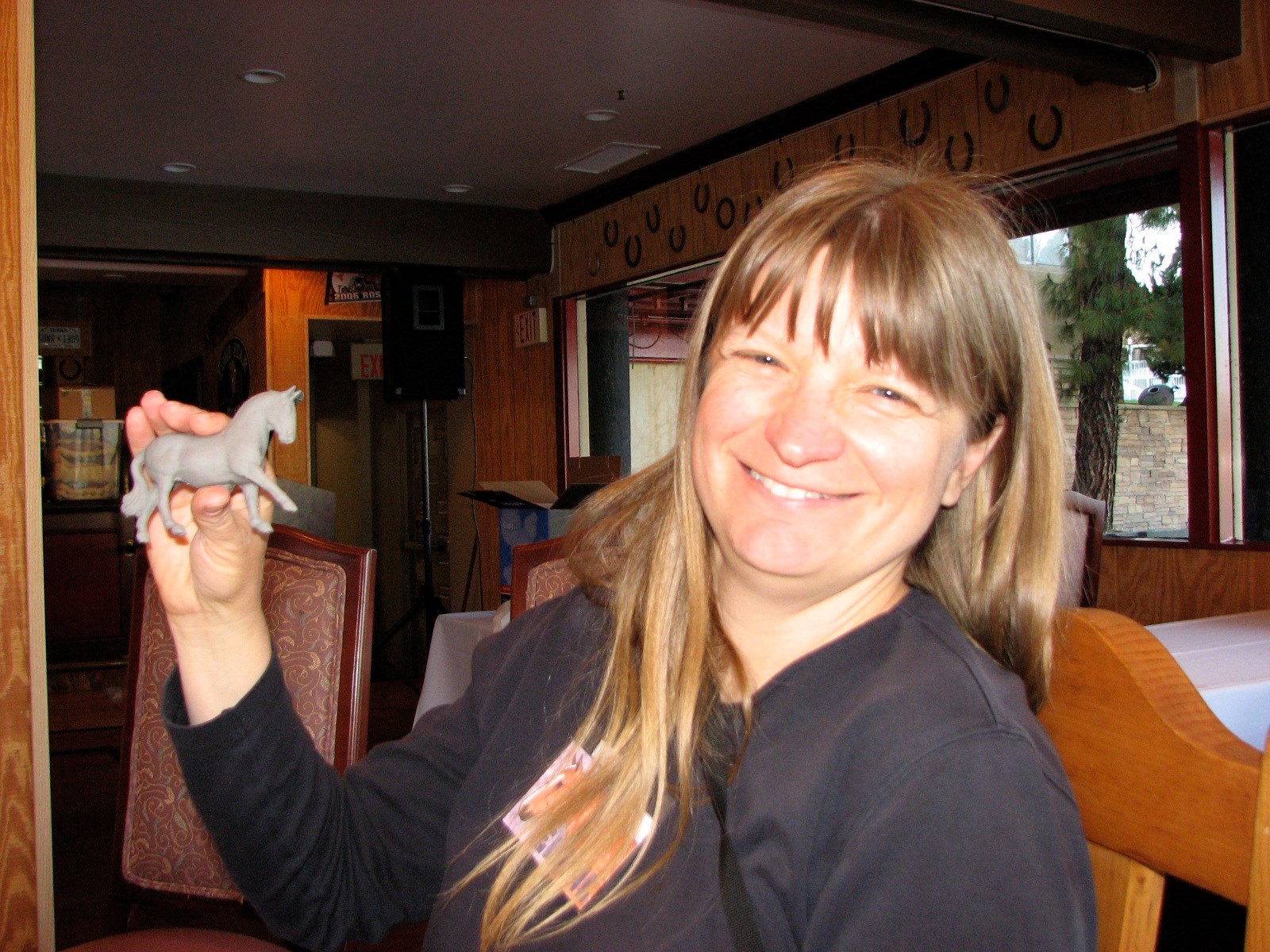
From the slipcasting workshop at Bring Out Your Chinas many years ago!
For people itching to get going, a great place to start is to work on airbrushing skills, if you want to airbrush underglazes. This is maybe the first thing I need to do right now, get my rusty skills active and then more precise.
Ceramics in any form is IMHO delightfully fun and for anyone who fears trying to make realistic colors, you can have so much fun with glazes just doing crazy glaze things. Medallions are the perfect medium to practice on and they’re just fun. Even just picking a single fun glaze can make something quite interesting.
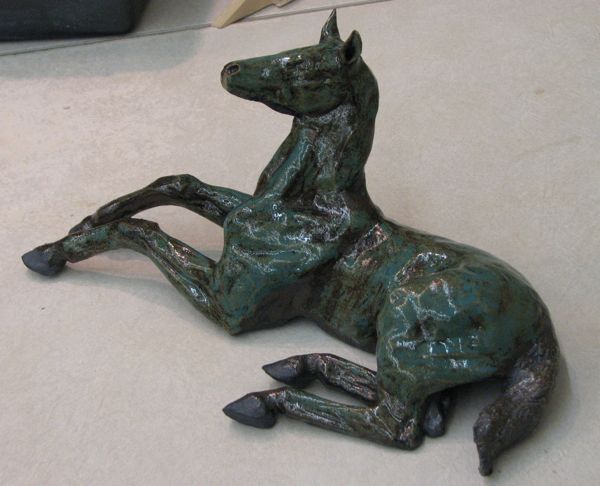
My local community college has an amazing ceramics program that allowed me to learn to throw and handbuild stoneware, do raku, and really emphasized making larger pieces. I made a lot of ware, really had to learn about finishing things, but I especially enjoyed how this one came out, which I named Emergence.
So cool! Would love to see what you do with ceramics!
I’ve only done slipcasting under some limited supervision by Joanie, Kristina, and Adalee but it’s something I’ve always wanted to do. I even have a (large) kiln that I’ve fired here a few times many years ago but I need to get its control board replaced.
Adding in a fresh comment here to help anyone new find their way. It’s a little awkward to get set up at first but it works decently once you’re in. I appreciate that there are apps for the phone.
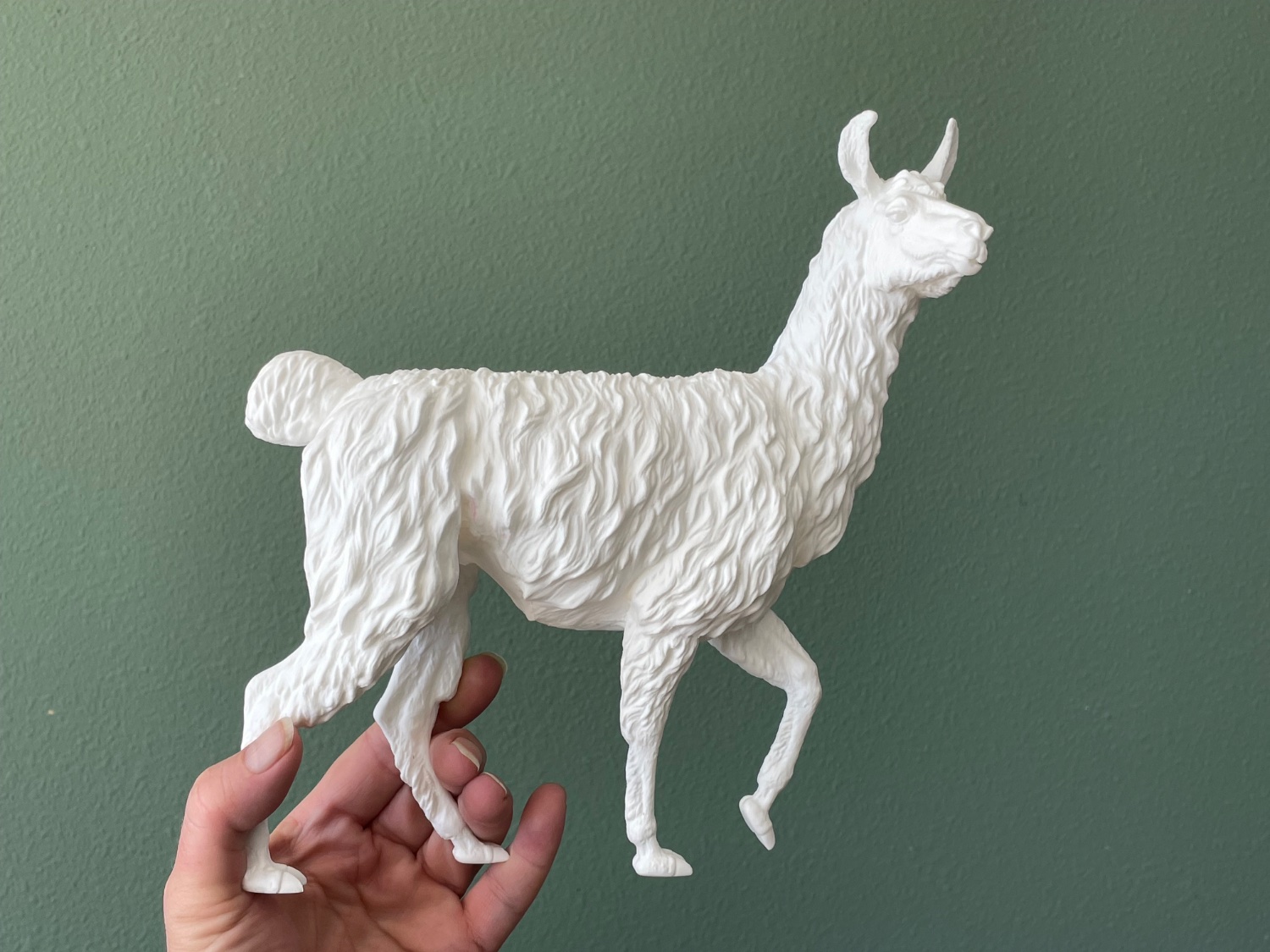
Also I quite like this new llama from Lynn Fraley, offered up as photo tax.
Love this! I also took Heather Bullach’s class. It did three fabulous things for me:
- Gave me some new colors and new color theory, including thoughtfulness about pigment opacity when choosing colors
- Introduced me to some new ways of thinking when placing color
- The discipline of the class time and the camaraderie of all painting together was fantastic to ensure that I was painting every week and not making it an ephemeral #10 on my to do list.
Taking classes is something I highly recommend, and just to point out that they’re not just for beginners - I’ve been in classes with our top artists as fellow students. Having a fresh perspective is just so helpful for breaking out of old habits, and we all have something to teach and learn.
Love your hoof experience! I too have been trying to get out of my formula for hooves and to paint more of what I see, all the lines, the rough edges of color, the surprising colors, the variation. Hooves can really make a piece sing and the sense of texture that they need best comes from both color choices and a topcoat of a different varnish/topcoat.

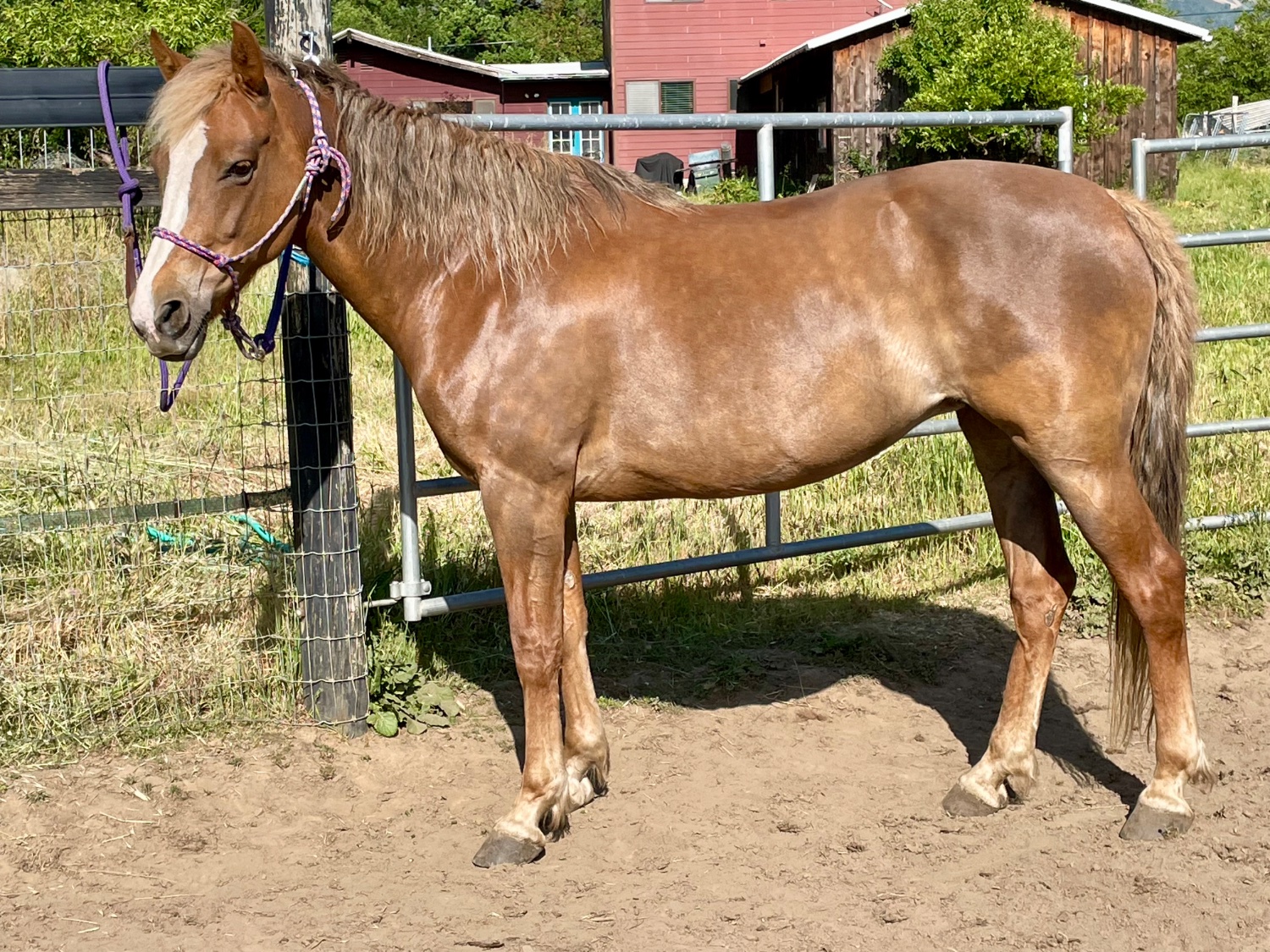
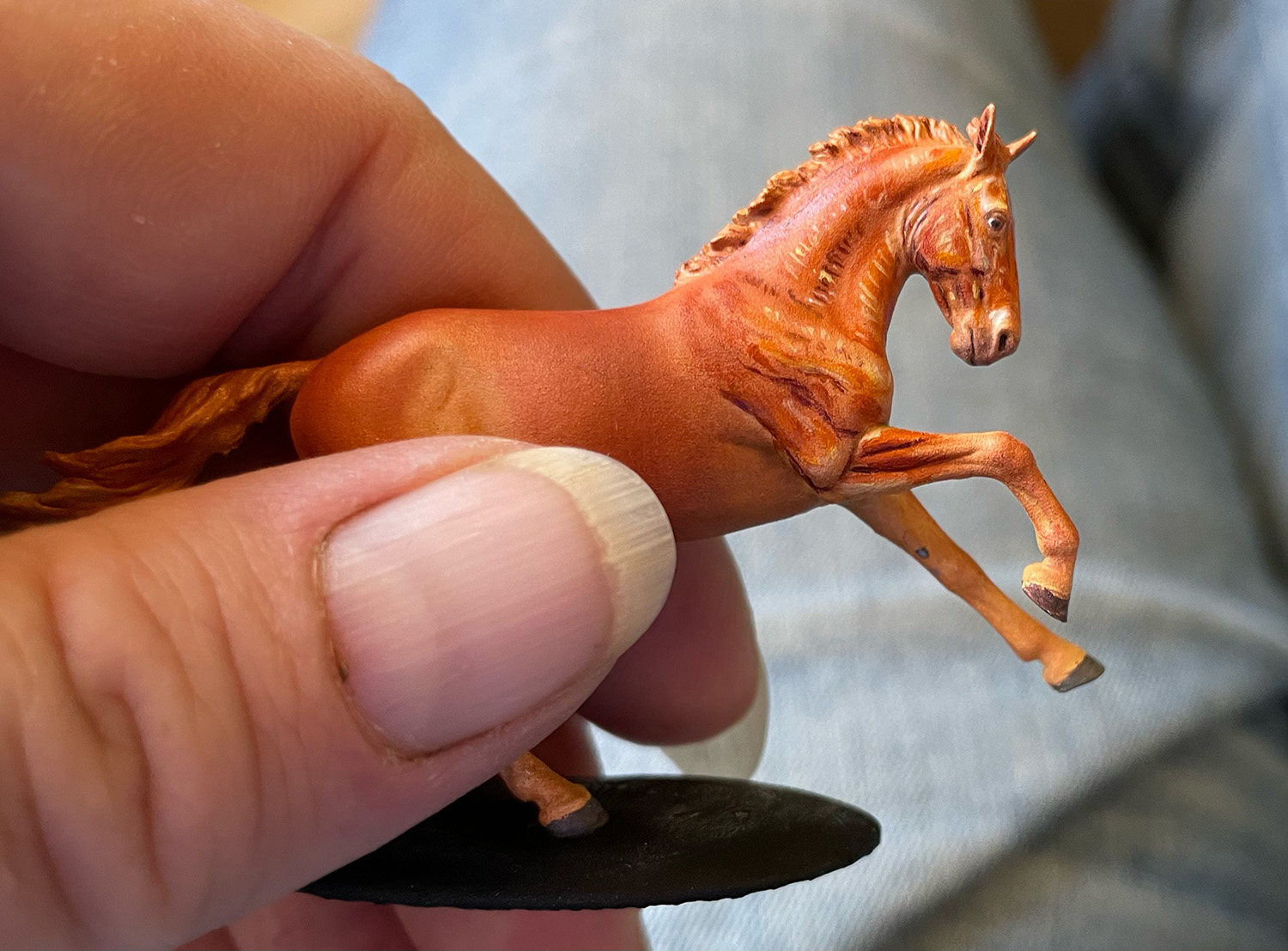
Consider this very ordinary picture of a chestnut (the sepia tone comes from the nd1 gene) in summer coat. The highlights aren’t uniformly or smoothly on the high points of the muscles or body - they zig and zag, interacting with the light direction, the body shape, and the hair.
The challenge for us: how do we get an effect like this to feel natural and appropriate and appealing when we move the model between different light sources and directions?

 1·1 year ago
For stallions of small, unusual breeds in particular, I often browse breeder sites to get a sense of what they name their stallions. Sometimes it’s quite interesting to see how naming styles are different in the originating region versus the diaspora of populations of that breed in the US or other countries.
I love this new list, and the engagement and ideas it represents. Super interesting to think about breeds and model horse show class lists in this way.
It’s important for us to keep thinking and innovating as we get new molds and new opportunities!

I was asked in another space about what I meant when I talked about string. Literally, a judge would place a maybe 1 foot (25cm) long piece of string or yarn over the top 15 or so models they were interested in placing, and ask for the others to be removed, so that the top horses would have more room for a close examination. The string might also be placed near or under the horse if a string over the back was problematic. Some shows have also used pennies or another marker, generally a marker you’re not meant to keep.
If you look at the classes in the post, the whole table is filled to the center and there’s no way to closely examine the center models for flaws or to really appreciate them. Removing the extra horses meant all the contenders could be seen and considered. This was especially important in spaces that aren’t aggressively lit.
Today we rarely tolerate models having to be in the center of a table at all, and we use oblong 8’ card tables in larger spaces. We also split classes much more aggressively - and no one offers a “stallions” class any more that would attract so many entrants.


A selection of Pinball Wizard’s NAN cards, including some of the first given out in 1994 at Western Regional Congress in Las Vegas, NV, and a set earned in 2024 at Canyons and Caballos in Los Angeles, CA. It’s neat to see how the cards have changed too!
There’s not much of it on the surface - really it ended up as just an armature. The ears and the maybe the cheeks are the only parts where the Hartland plastic reaches the surface.
The Hartland TB that the head came off of is in a body box somewhere, with a narrowed Stock Horse Stallion head on it. Not sure why that happened, most likely it’s the classic Seemed Like A Good Idea At The Time. Maybe someday I’ll finish it!
One of each mold is a pretty realistic goal! I also am a total sucker for palomino, especially glossy palomino.
Glad to help!
 1·2 years ago
Thank you! I really love this scale and want to try to put together some good performance in this size, with a rider too. I have some 1/18 scale figures that may work with some modifications, though this size, you have to get things right to the millimeter for it to look right.




Can you say a bit more about your mishap, specifically? I’m not your expert but the right consistency is kind of … maybe somewhere a bit thicker than heavy cream ish, if that helps. It should flow readily but not be watery.
The second variable to consider is how long it stays in the mold before you take it out. The plaster absorbs water from the slip and you need to remove it at just the right time - it’s firmed up, but is still pretty wet, like cold leather.
And also: IIRC because the plaster absorbs water from the slip, you won’t get the same result/drying time if you try to pour again right away into the same mold. Lesli please correct me if I am wrong here, and how long you wait for the second pour.