
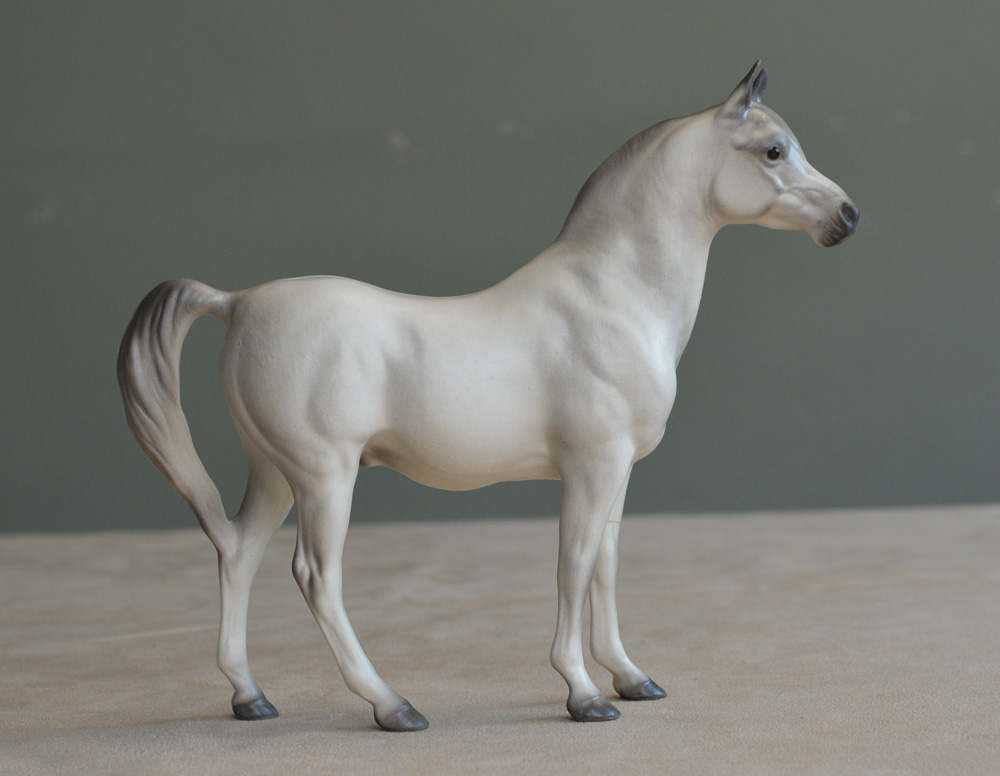
Anyone else start on these? I had a mishap with my 2nd one. I am wondering how thin the slip needs to be. Ideas? Thoughts? Thanks Karen
Thickness of the slip varies depending on what you are casting. Simple things like a medallion can be cast with thicker slip, while a model horse - especially one with thin legs - needs thinner slip.
First, before you use slip, you should always stir it with a mixer. The chemicals that keep the clay in suspension make it tend to “gel” rather than dry out. Mixing what you plan to use (or the whole bucket, if you retrieving a portion to use) is always the first step. Slip that looks too thick often thins out dramatically just from proper mixing.
I use something like this (with the whisk attachment) for slip in pitchers. I use a large paint mixer on a Dewalt drill for buckets.
Once you have the slip throughly mixed, there are two more tests you can do to see if your slip is the right consistency. I will note that I don’t often do these two things IF if have been using my slip consistently (ie., it’s being mixed every day, so hasn’t sat for long periods) and if I am pour things that aren’t finicky (like medallions).
-
Check your Specific Gravity. To do this, you pour slip into a container and weigh it on a kitchen scale. (I use a Dixie Cup. You don’t need much. Then use the same container, and pour an equal amount of water. Divide the weight of the slip by the weight of the water. The target you want for most things is around 1.7-1.75. Anything higher and you are going to want to add a little distilled water. (Horses cast a bit lower, and small scale horses might go down to 1.55-1.6.)
-
Check your viscosity. You use a small cup with a hole in the bottom and record the time it takes to clear the whole container. The cup is called a Ford cup. Your target for clearing the slip from the cup is around 45 seconds. There is a lot more wiggle room with viscosity than with specific gravity, so unless it’s way slower or way faster, I wouldn’t mess with this one. The fix for it is adding a deflocculant to the slip, which is tricky. (If anyone finds they need this, I’m happy to post separately about it.)
For commercially made slip like what I have used for the medallions, you rarely need to do more than mix it well so long as it is well sealed. I’ve never had to do more than check the SG and add a tiny bit of water.
-
Can you say a bit more about your mishap, specifically? I’m not your expert but the right consistency is kind of … maybe somewhere a bit thicker than heavy cream ish, if that helps. It should flow readily but not be watery.
The second variable to consider is how long it stays in the mold before you take it out. The plaster absorbs water from the slip and you need to remove it at just the right time - it’s firmed up, but is still pretty wet, like cold leather.
And also: IIRC because the plaster absorbs water from the slip, you won’t get the same result/drying time if you try to pour again right away into the same mold. Lesli please correct me if I am wrong here, and how long you wait for the second pour.
I do no generally pour twice in a day. I find my molds keep their detail (and produce “crisp” castings) longer if I alternate days of casting. Basically, I want the mold to dry in-between castings. I know that at Pour Horse, they used to cast twice a day, but that was in Carlsbad, which has a more arid climate.
One way to tell that you are pouring when the mold is too wet is if the clay leaves a significant stain inside the design of the mold. Your clay should darken the mold ever so slightly (because it is wet) after you remove the casting, but it shouldn’t leave actual clay residue behind. Usually, if the is happening, the mold is too wet - or the casting is being removed too soon.